

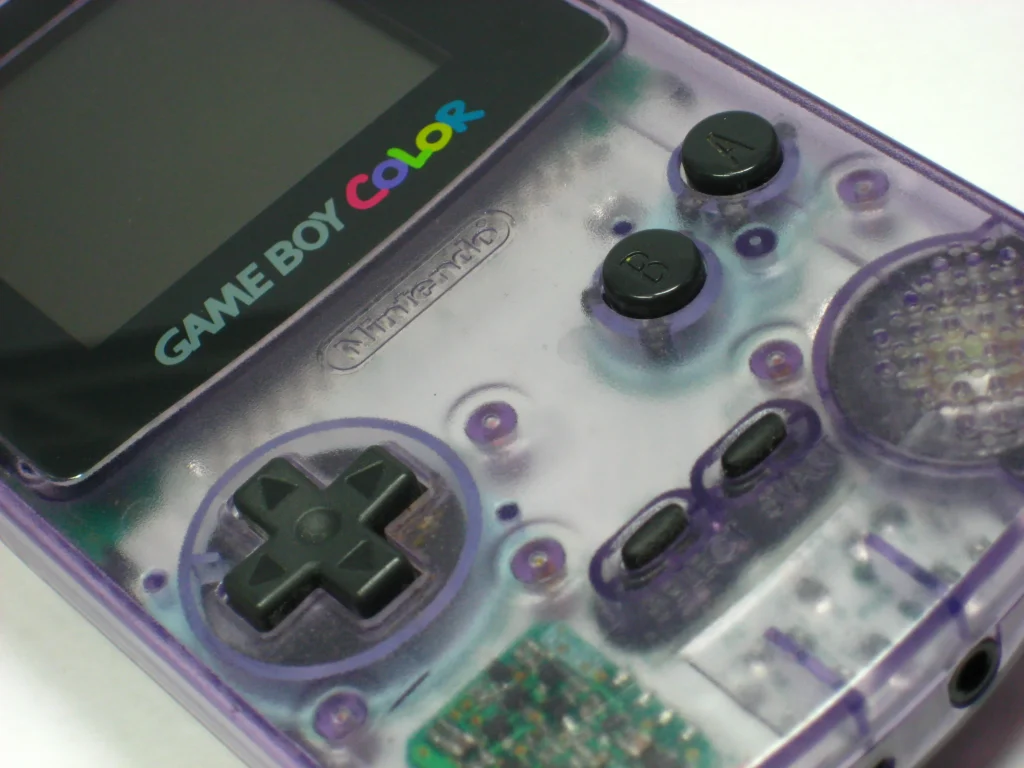
There’s a whole generation of us who spent our childhoods squinting into the back of a see-through Game Boy Color, watching tiny green circuit boards do their work while Pokémon Red loaded. Then somewhere around 2005 the clear casing quietly vanished, and every piece of consumer electronics got wrapped in the same slab of anodised aluminium or gloss black plastic. We’d like to put forward a modest proposal: bring it back.
Mainly because it looks cool. But we can dress that up a bit if you want us to.
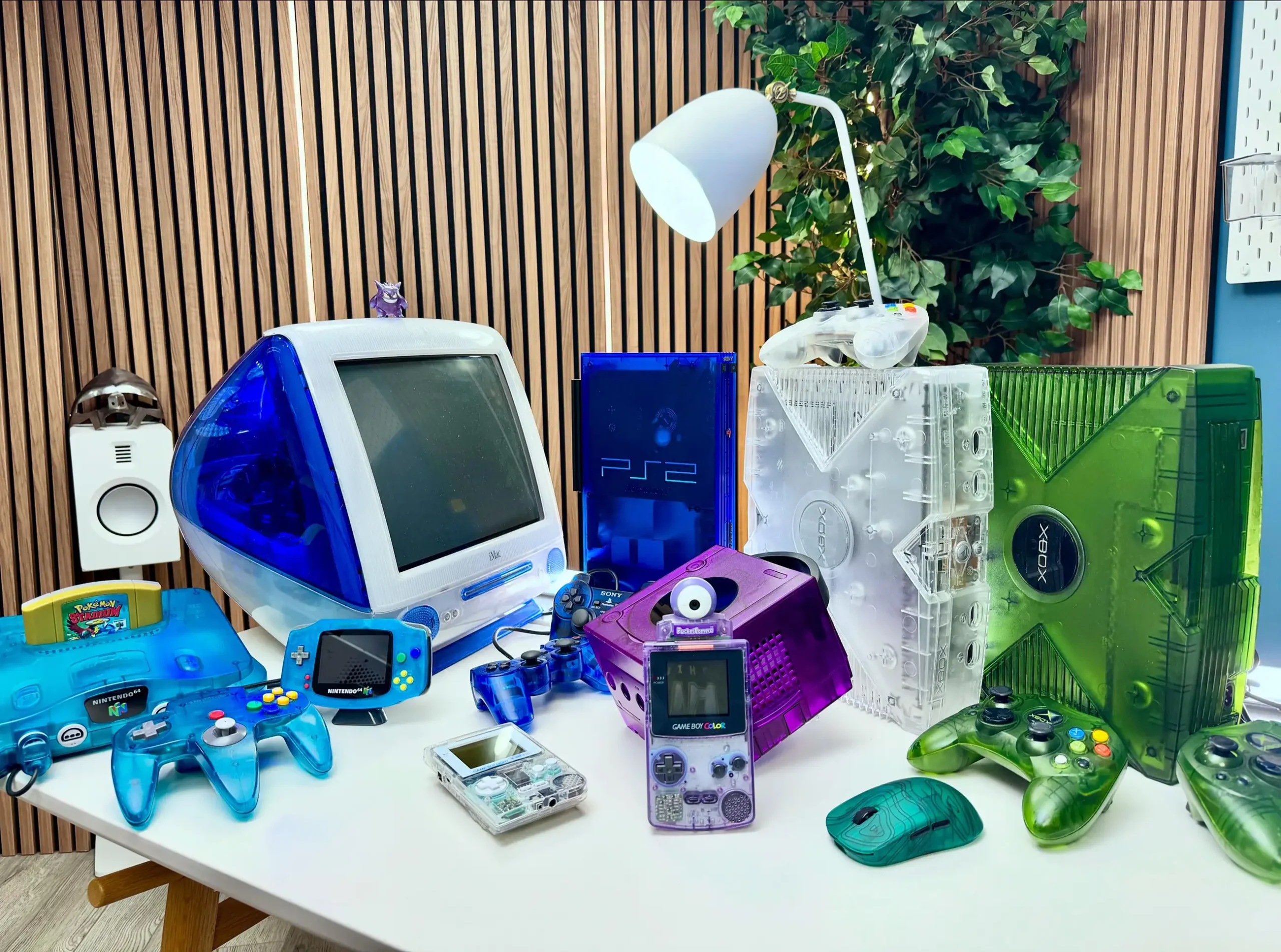
Clear tech’s golden era was roughly 1996 to 2004, and the hits came thick and fast. Apple’s iMac G3 (1998) dropped with a translucent Bondi Blue shell and quietly rescued the company from the brink of bankruptcy. Nintendo spent the late ’90s and early 2000s releasing clear Game Boys, the “Funtastic” range of Nintendo 64s in Ice Blue, Jungle Green, Grape Purple and Watermelon Red, and the inevitable see-through Game Boy Advances. Sony had the WM-3500sp Walkman showing off its mechanical innards. Microsoft closed the era out with the Xbox Crystal in 2004, a limited edition released in Europe and Canada for the console’s second anniversary, complete with matching translucent controllers.
Before any of that, though, the look started somewhere much grimmer. Clear cases were first developed in the 1970s and ’80s for prison electronics: TVs and radios you could inspect at a glance to make sure nobody had hidden anything inside. Then the aesthetic leapt the wall, the Conair light-up clear trimline phone became a teenage bedroom staple, and by the late ’90s the “see the thing working” energy had become mainstream design shorthand for “the future”.
Two reasons, really. One cultural, one extremely practical.
The cultural bit is easy: by the mid-2000s, the industry pivoted hard towards minimalism. Apple went from translucent tangerine iMacs to slabs of brushed aluminium. The iPhone arrived and set the template for everything that followed: one unbroken surface, internals absolutely hidden, no fingerprints allowed on the illusion. Colourful, playful, see-through design started to look like something for kids.
The practical reason is more interesting, and it’s really the meat of why clear tech is rare even now.
Here’s what goes wrong:
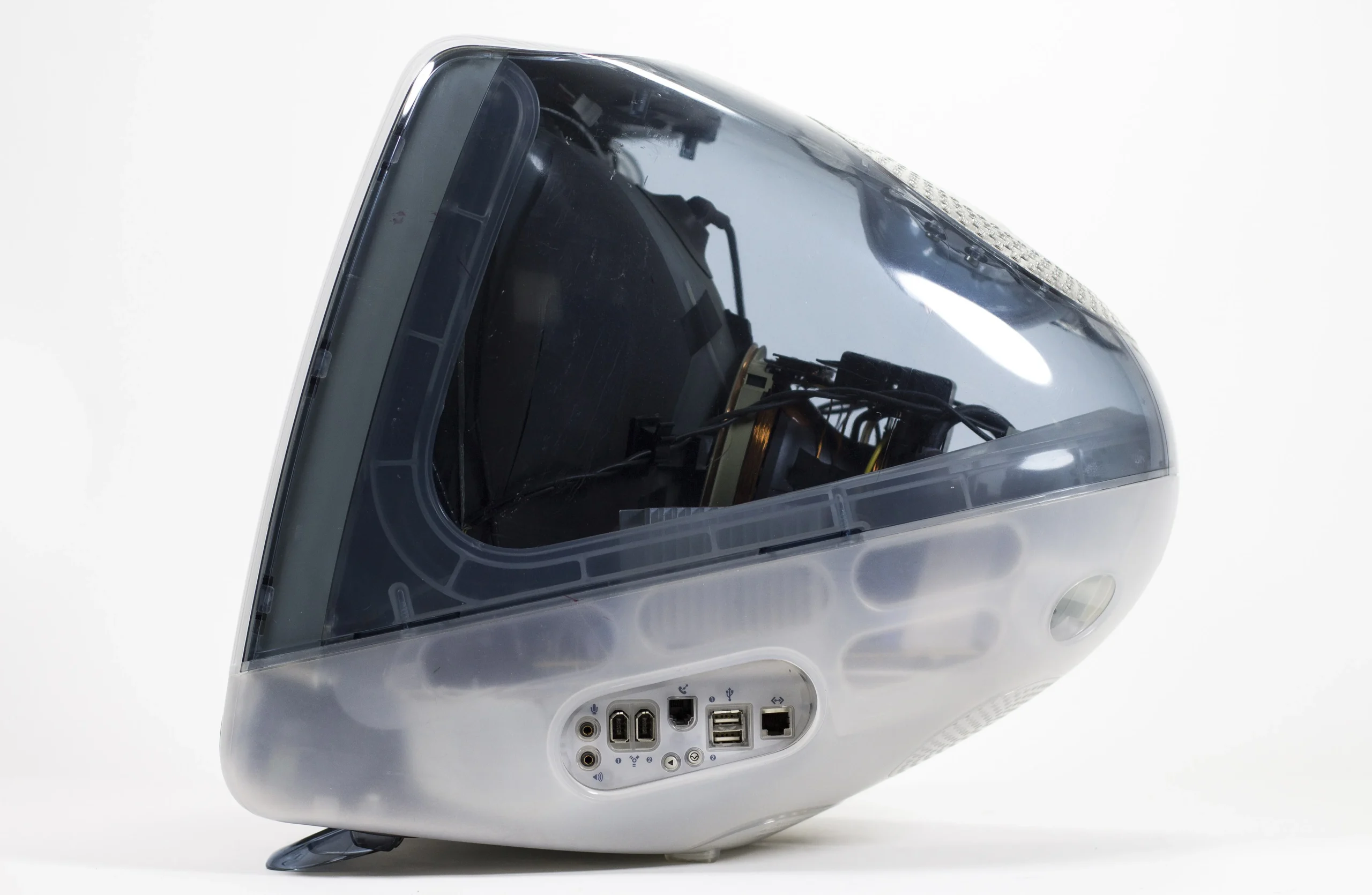
• The plastic yellows. Older clear cases (your SNES, your original Macs, loads of ’90s Apple kit) famously turn a sickly beige over time. The culprit is bromine, used as a fire retardant in the plastic, reacting with UV light and oxygen. That’s why your mate’s “retro” Super Nintendo looks like it’s been chain-smoking since 1993. Modern polycarbonate formulations are much better, but the reputation stuck.
• Both sides of the case have to be finished. On a normal device only the outside gets polished; the inside can be rough, ugly, full of mould marks. On a clear case the inside is visible too, so every surface has to be presentable.
• Everything hidden suddenly isn’t. Screws, glue, magnets, wiring, solder joints, the little bosses that hold things in place. All of it is on display. Nothing’s Carl Pei has spoken about struggling to find manufacturers willing to build their phones, because features that are usually hidden (like the magnets for wireless charging) now needed to be polished to look good. Microsoft famously coloured the insides of its translucent Xbox controllers silver, with green accents under the D-pad, just to make the guts worth looking at.
• It costs more. All of the above adds production steps, raises reject rates, and puts strain on the supply chain. Easier and cheaper to spray it black and move on.
So clear tech didn’t die because people stopped loving it. It died because minimalism arrived at exactly the moment when every manufacturer realised how much cheaper opaque was.
Open TikTok for five minutes and you’ll see what’s happening. The #Y2K tag has racked up millions of views, and Gen Z have collectively decided the early 2000s were the peak of cultural aesthetics: low-rise jeans, butterfly clips, chrome gradients, frosted eyeshadow, flip phones, digital cameras, baby tees, the lot. Psychologists have even pulled out a word for it: anemoia, nostalgia for a time you never actually lived through. Most of the people romanticising the era were toddlers in 2003.
Clear tech is core Y2K. The iMac G3, the see-through Game Boys, the translucent Tamagotchis and clear trimline phones are visual shorthand for the whole aesthetic, right up there with inflatable furniture and Paris Hilton’s flip phone. You can’t do a proper 2000s revival without the clear plastic.
The same mood is driving a big resurgence in physical media. Vinyl has boomed for years, CDs are on the rise again, cassettes are having a weirder moment, and wired headphones, digital cameras and flip phones are showing up at Gen Z parties as deliberate rejections of the featureless-slab era. Clear tech fits the same pocket. It’s the opposite of the sealed black box. It says here is the machine, here is what it does, you can see it working.
There’s also a design-honesty argument on top. In a world where most of our tech is increasingly controlled by software we can’t inspect, a device that puts its circuit board on show feels like a small act of resistance. You can see what you paid for. Nothing’s entire brand thesis is basically this idea with a Glyph LED strip glued to the back.
The good news is it’s already happening:
• The Nothing Phone series. The obvious torchbearer, with transparent backs showing off visible coils, screws and that signature Glyph Interface.
• Nothing Ear buds. The earbuds that started the whole Nothing aesthetic in 2021.
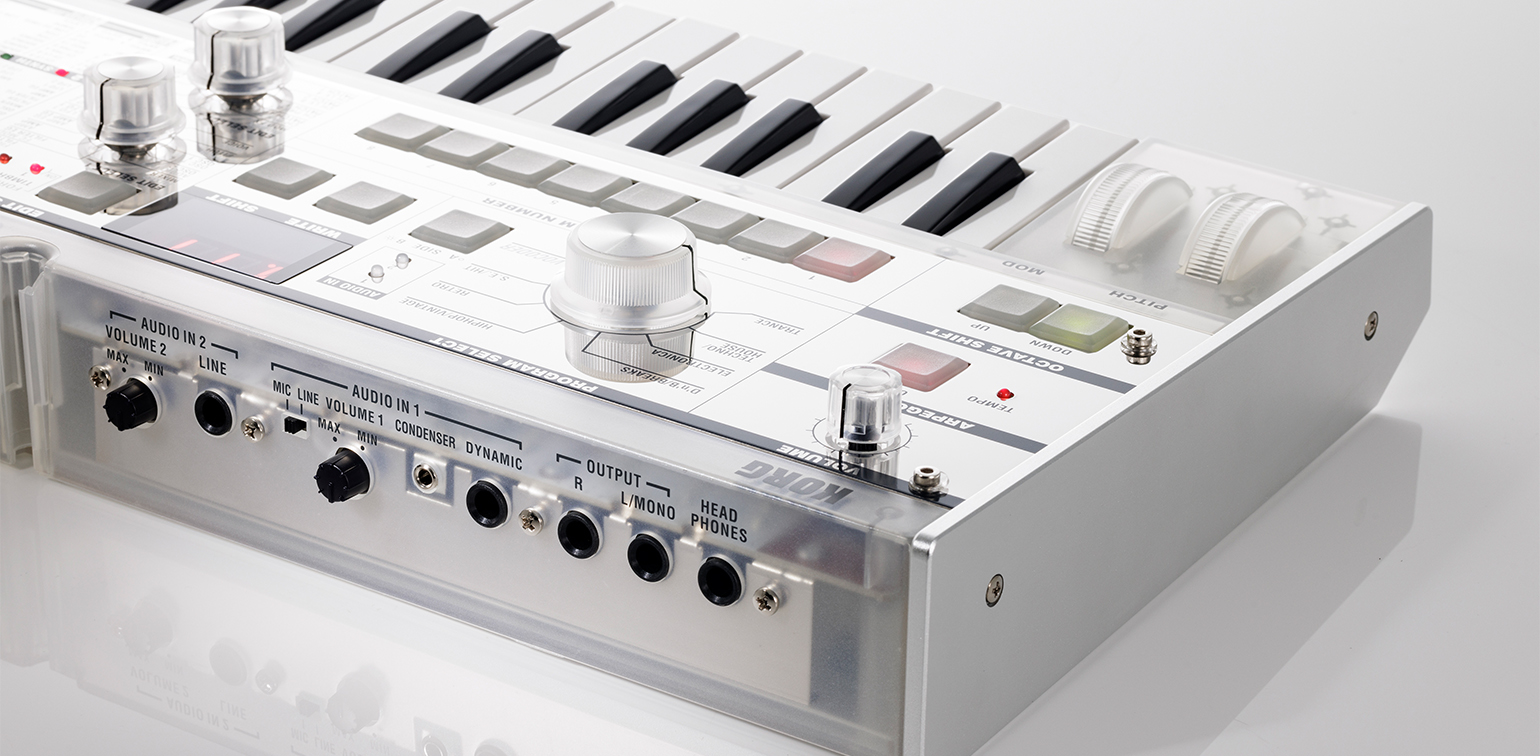
• MicroKorg Crystal. Korg’s 20th-anniversary edition of its classic synth, with a semi-translucent chassis, see-through knobs, and a matching clear vinyl carry bag so you can show it off in transit.
• ClearFrame CD Player. A Tokyo-designed, £150 polycarbonate CD player that frames the disc and album art like a piece of gallery work. Aimed squarely at the CD-revival crowd.
• Analogue Pocket Transparent Editions. The premium FPGA handheld released in seven clear colourways in 2023, directly quoting the Game Boy Color era.
It doesn’t all need to go clear. We don’t want to live in a world where your washing machine exposes its own plumbing. But the current default (everything black, everything sealed, everything designed to disappear) is having its longest possible run, and it’s boring. A device that shows you how it works is friendlier, more repairable, more honest, and more fun to own.
Also, and we cannot stress this enough, it looks cool. That ought to be reason enough.